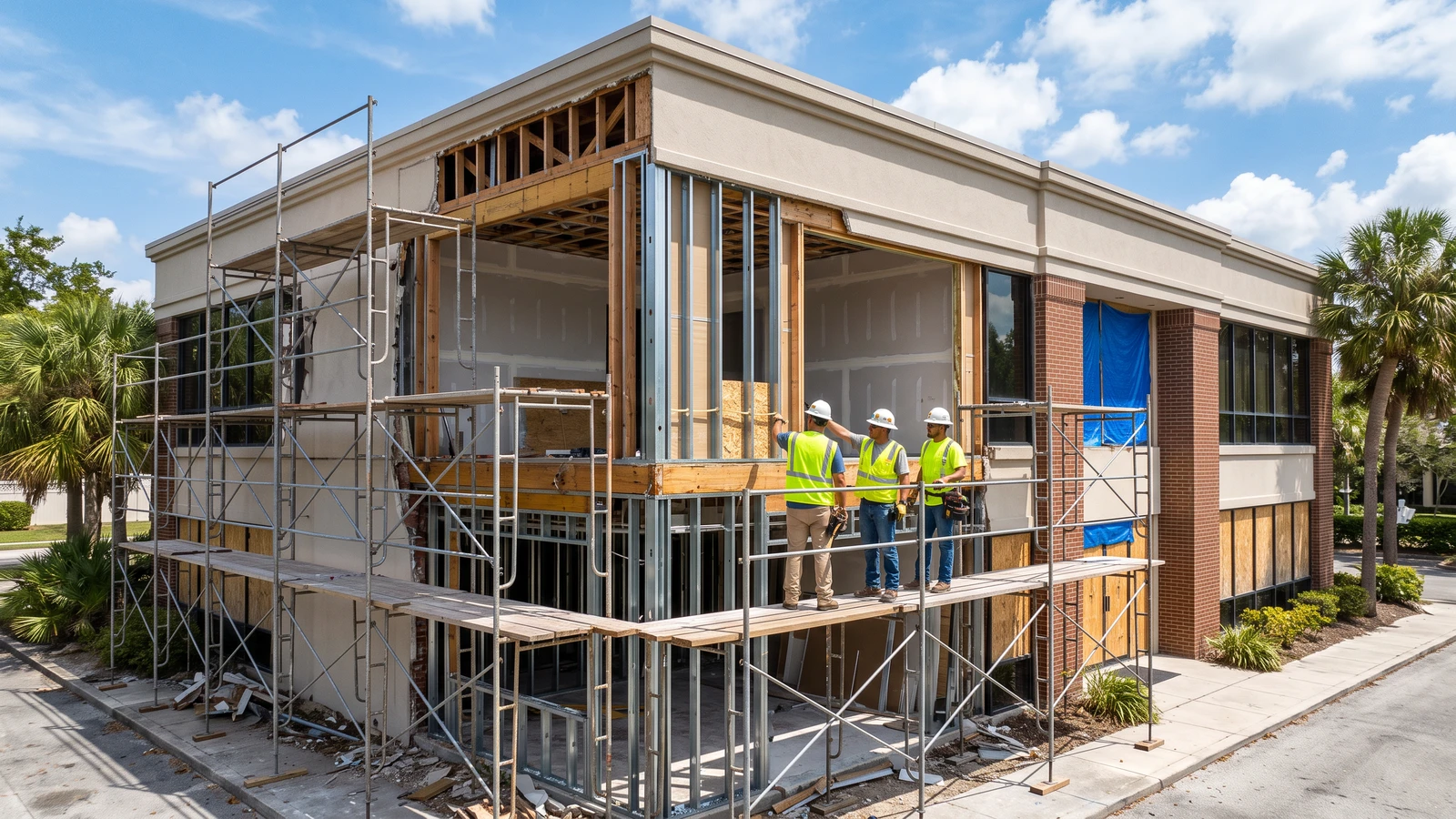
When a fire, burst pipe, roof failure or hurricane damages a commercial building, the clock starts immediately. Tenants need answers, owners need a budget, and insurance carriers need documentation. Commercial property reconstruction is the process of taking a damaged building from emergency stabilization back to a fully permitted, occupied and operating property. At ZLS Contractors, we help property managers, association boards and owners across Orlando, Winter Park, Maitland and Lake Nona work through that process with a clear plan and a single accountable team.
This guide covers what reconstruction includes, how to work with carriers and adjusters, what permitting looks like, how long projects realistically take, and how to keep tenants operating while the work happens.
What commercial property reconstruction covers
Reconstruction is broader than a repair. It restores the building to its pre loss condition, and often brings affected areas up to current code at the same time. Most projects touch three categories of work.
Structural work
Fire, water intrusion and wind can weaken framing, trusses, sheathing, masonry and connections. Structural reconstruction starts with an assessment, sometimes by a licensed engineer, to decide what can stay and what must be replaced. Typical work includes replacing damaged wood or metal framing, repairing roof decking and trusses, reinforcing or rebuilding load bearing walls, and restoring fire rated assemblies between suites.
Building envelope
The envelope is everything that keeps weather out: roofing, exterior walls, stucco, windows, storefronts, doors, flashing and sealants. After a storm, envelope repairs are usually the first priority, because every day the building stays open to rain adds interior damage. Getting the envelope right also matters for your next insurance renewal and for preventing mold.
Interiors
Inside, reconstruction usually means removing wet or smoke damaged drywall, insulation, ceilings and flooring, then rebuilding with new materials. It can also include doors, frames and hardware, millwork, restroom finishes, and coordination with licensed electrical, plumbing and mechanical trades. In multi tenant buildings, interior work is often phased suite by suite so undamaged areas can stay open.
Working with insurance carriers and adjusters
Most commercial reconstruction is paid, at least in part, through a property insurance claim. How the claim is handled has a direct effect on your budget and schedule.
Document early. Before anything is removed, photograph and video the damage from wide shots to close ups. Keep a log of dates, times, weather and who was on site. Save receipts for emergency services such as water extraction, board up and temporary roofing.
Mitigate promptly. Most policies require the insured to take reasonable steps to prevent further damage. Drying out the building, tarping the roof and securing openings protect both the property and the claim.
Get a detailed scope. Adjusters commonly write estimates in Xactimate, a line item estimating program widely used by carriers. Your contractor should be able to prepare a scope in a comparable format, walk the property with the adjuster, and explain any differences line by line. Missed items such as code upgrades, hidden damage behind finishes, or matching materials are where most claim disagreements start.
Understand code upgrade coverage. Florida building codes change over time, and rebuilding may require upgrades the original building never had. Many commercial policies include ordinance or law coverage for those costs, but limits vary. Ask your agent what your policy provides before work begins.
Keep the decision maker informed. For associations and managed properties, set up a clear reporting path to the board or ownership. Written supplements, change orders and progress photos make approvals faster and keep everyone aligned.
A contractor does not replace your agent or, if you hire one, a public adjuster. What a good contractor does provide is accurate scopes, honest pricing and documentation that holds up when the carrier asks questions.
Permitting and inspections
Nearly all reconstruction work requires permits. Structural repairs, roofing, window and storefront replacement, and electrical, plumbing and mechanical work each carry their own permit and inspection requirements.
The permitting office depends on the address. The City of Orlando covers downtown and Lake Nona. Winter Park, Maitland, Altamonte Springs and Kissimmee each run their own building departments, and unincorporated properties fall under Orange, Seminole or Osceola County. After a major storm, many jurisdictions publish expedited procedures for damage repairs, but review times can also stretch as applications pile up.
Your contractor should pull permits under a valid Florida license, prepare or coordinate any required drawings or engineering letters, schedule inspections, and be on site when inspectors arrive. ZLS Contractors holds Florida Certified General Contractor license CGC1540267, which allows us to work in any county. Closed permits and passed inspections are what you will need for insurance, lenders, future buyers and your certificate of occupancy if one is required.
Realistic timelines
Every loss is different, but most commercial reconstruction follows the same sequence:
- Emergency response and stabilization: days. Water extraction, board up, temporary roofing and securing the site.
- Assessment, scope and claim negotiation: often two to six weeks, depending on the carrier and the complexity of the damage.
- Design and permitting: a few weeks to a couple of months, longer when engineering or significant code upgrades are involved.
- Construction: anywhere from several weeks for localized interior damage to several months for structural or full envelope work.
- Closeout: final inspections, punch list, cleaning and documentation for the carrier.
Material lead times can extend any of these stages. Storefront systems, impact rated windows, specialty doors and roofing materials are frequently backordered after regional storms. Ordering long lead items as soon as the scope is approved is one of the most effective ways to protect the schedule. Ask any contractor for a written schedule with milestones, and ask how they will communicate if a date moves.
Keeping tenants operating during work
For property managers, the hardest part of reconstruction is often not the construction. It is keeping tenants, residents and customers safe, informed and in business.
- Phase the work. Separate damaged areas from occupied ones and rebuild in stages, so undamaged suites or buildings stay open.
- Protect air and access. Dust barriers, negative air where appropriate, and clearly marked, separate construction entrances keep occupied areas clean and safe.
- Schedule around operations. Noisy demolition and deliveries can often be moved to early mornings, evenings or weekends by agreement.
- Keep life safety systems working. Exits, fire alarms and sprinklers must remain functional or be covered by an approved temporary plan.
- Communicate on a schedule. Regular written notices to tenants about what is happening, what areas are affected and who to call reduce complaints and keep leases on track.
It also helps to review leases early. Many commercial leases include clauses on rent abatement, restoration responsibilities and the landlord's timeline to rebuild after a casualty. Tenants may carry their own business interruption and contents coverage, and their adjusters will want access too. Knowing who is responsible for which improvements, and sharing a realistic schedule with tenants, prevents disputes later. For medical, food service and retail tenants in particular, even a few extra days of closure can be costly, so we work with managers to identify which suites should be returned first and plan the sequence around them.
If you are also weighing contractors for future improvements, our guide to choosing a commercial remodeling contractor covers licensing, insurance, budgets and the questions to ask before you sign.
Areas we serve
ZLS Contractors provides commercial property reconstruction throughout the greater Orlando area, including:
- Orlando
- Winter Park
- Maitland
- Altamonte Springs
- Lake Nona
- Kissimmee
If your property is in a neighboring community, contact us. We regularly work beyond this list.
Talk with a reconstruction team you can reach
Damage to a commercial building is stressful enough without chasing a contractor for updates. We bring licensed oversight, detailed scopes that work with your carrier, and a single point of contact from stabilization through closeout. Call (407) 893-0112 or request a reconstruction estimate and we will schedule a site visit.